Takeouts from Your Social Feed: Winning the Attention Race
Events
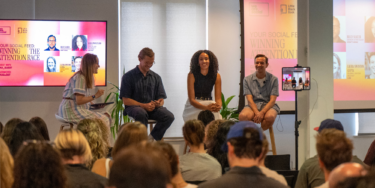
In partnership with LBB, our latest event explored how brands can take a modern, social-first approach that turns cultural signals into stories that sell.
Our panelists: Billy Slater, Senior Strategist at Kraft Heinz, Karla Powlesland, Social & creative lead, Vaseline & Tresemme at Unilever and Paul Greenwood, EMEA Head of Cultural Insight & Strategy were joined by moderator Laura Swinton Gupta, Global Editor In Chief, LBB. They shared how brands can move beyond making ‘content’ to creating work that builds both meaning and momentum.
Here are the key takeouts from the session.
No Social Strategy Without Brand Strategy
Erratic, chaotic social feeds are usually a symptom of a weak brand strategy. The consensus among the panelists was clear: to lead the space instead of chasing trends, you must know exactly who you are.
The Red Thread: Social shouldn’t live in a silo; it requires a direct line back to your core brand identity.
Brand Universes: To keep localisation seamless, establish distinct ‘brand universes’ or guidelines for each product so teams instantly know what is culturally relevant to their specific cohort.
The Gold Standard: Look at brands like e.l.f.—they use a razor-sharp brand identity to consistently uplift underrepresented voices (like sponsoring female NASCAR racers) rather than just mimicking whatever is viral.
Don’t Be the Dad at the Disco
Brands shouldn’t post with the sole intention of feeding the algorithm, there is enough digital noise already. Instead, focus heavily on entertainment value and cultural self-awareness.
Know Your Role: As Billy put it, brands are not on social to ruin the joke. Before jumping on a timely trend, ask: Will this actually build brand equity, or is it going to be cringe worthy?
Relevance Over Frequency: Paul challenged the traditional industry mandate of an “always-on” content strategy, arguing that some brands should strive to be always relevant instead.
The Ultimate Loop: Use online momentum to drive offline action. Brands are seeing success with coordinating communities online, connecting with them via real-life events, and then flooding social feeds with content generated from that real-world connection.
Master the “Mindsets, Movements, and Moments” Framework
To distinguish between a flash-in-the-pan fad and a long-term cultural shift, Paul introduced a three-tiered framework for content teams:
Mindsets (Decades/Lifetimes): Deep-seated consumer values. These form the bedrock of your overarching brand.
Movements (3–5 Years): Medium-term cultural shifts (e.g., sustainability, mindfulness). Brand newsrooms and content strategies should tap into these year-on-year with clear guardrails.
Moments (Days/Weeks): Fast-moving, hyper-current. Play here with organic social where stakes are lower, sign-offs are faster – and successful content can then be boosted via paid media.
True Co-Creation Requires a Value Exchange
Whether navigating TikTok fandoms or highly protective Reddit communities, communities hold the power. Brands cannot simply force their way into these spaces; they must offer a genuine value exchange.
Listen to the Quirks: Take inspiration from Vaseline Verified. Karla explained that instead of pushing standard corporate messaging, Vaseline leaned into how real people were actually using the product in the wild (e.g., treating nipple chafing) and verified those community hacks.
Respect the Platform Codes: Fandoms and subreddits have incredibly long memories and can spot corporate sabotage or insincerity instantly. If you want to activate on platforms like Reddit, you need a dedicated presence (like Keith from Sonos) who understands the community’s specific language and codes.
Move Beyond “Fast Metrics” to Measure Real Impact
While immediate metrics are great for a quick pulse check, the real value of social lies in its long-term, slow-burning impact on the business.
The Metric Split: Karla noted that senior stakeholders will always look at reach, but real brand fans are found in the “high-intent” engagement metrics: comments, saves, and shares.
The Long Game: Look to “slower” macro-metrics to prove ROI. Brand lift studies, sales uplift data, and search spikes. For example, in the automotive sector, a spike in search uplift following a social content burst reliably predicts a spike in physical sales three months later.
The Social-Search Convergence: Keep an eye on tools like Google Search Console (currently rolling out features in the US) that allow brands to track exactly how social content redirects organic search traffic straight to their websites, bridging the gap between awareness and conversion.