Digital 2027 Australia: social ad spend is soaring, but are brands earning attention?
Reports
Cristina Forlani
We Are Social
Australia’s social advertising market is growing three times faster than digital advertising overall. Our latest Digital 2027 Australia report reveals where Australians are spending their time, how they’re discovering brands and why marketers need to think beyond bigger budgets.
Australia is spending big on social. Social advertising investment is growing at three times the rate of the wider digital market, putting Australia among the world’s highest spenders per social media user identity.
And there’s good reason for that investment. Australians are spending more time on social media than watching linear TV, and social has become a key destination for researching brands and products.
But at the same time, almost three in ten Australians use ad blockers, and only around one in ten feel represented in the advertising they see.
So while brands are getting very good at buying attention, there’s still plenty of work to do when it comes to earning it.
Our latest Digital 2027 Australia report, created in partnership with Meltwater, explores the behaviours, platforms and cultural shifts shaping Australia’s digital landscape, and what they mean for marketers in the year ahead.
Here are the findings worth paying attention to.
Digital 2027 Australia: the key findings
The latest Australian data reveals:
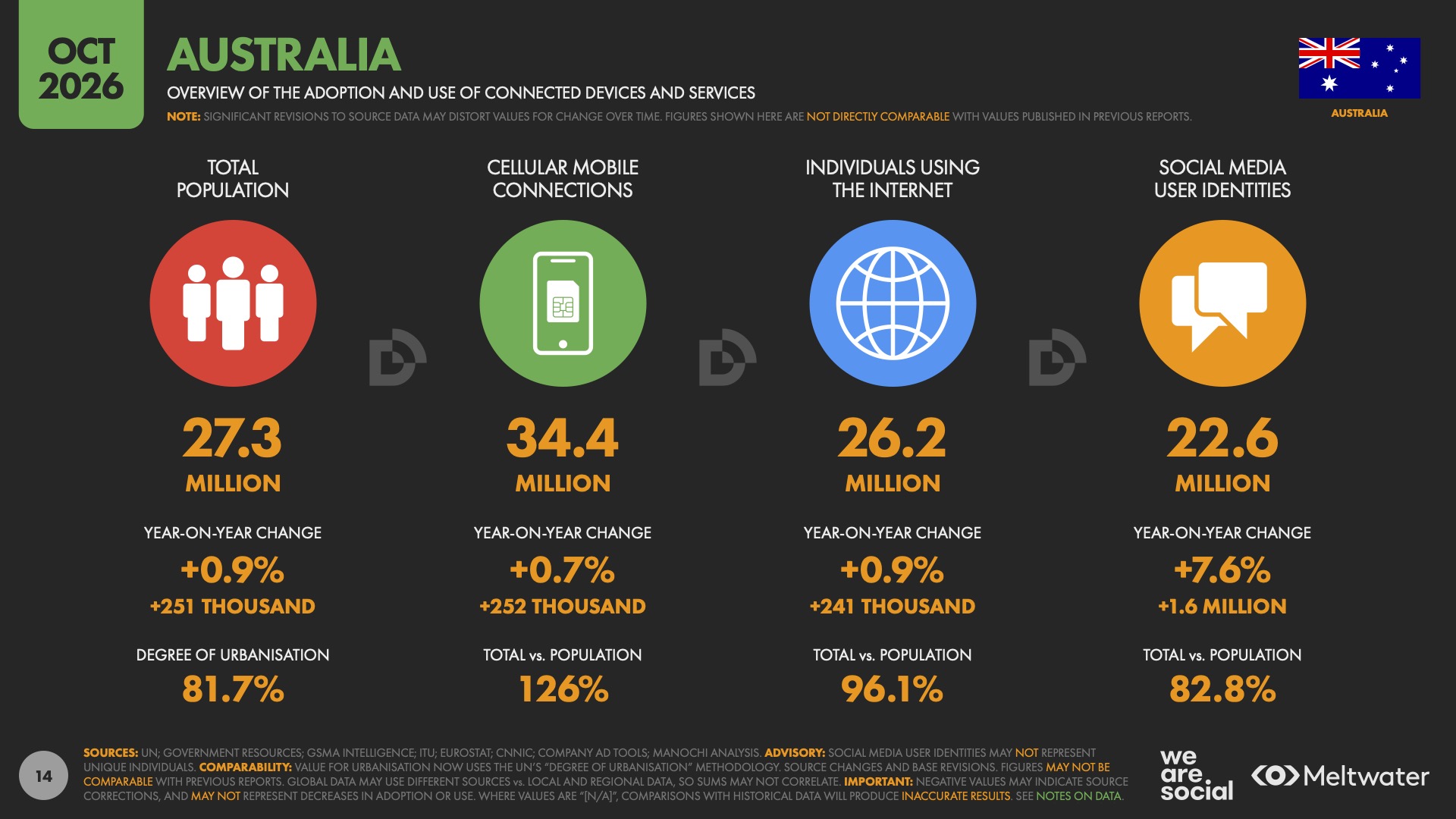
22.6 million social media user identities in Australia, equivalent to 82.8% of the population and up 7.6% year-on-year.
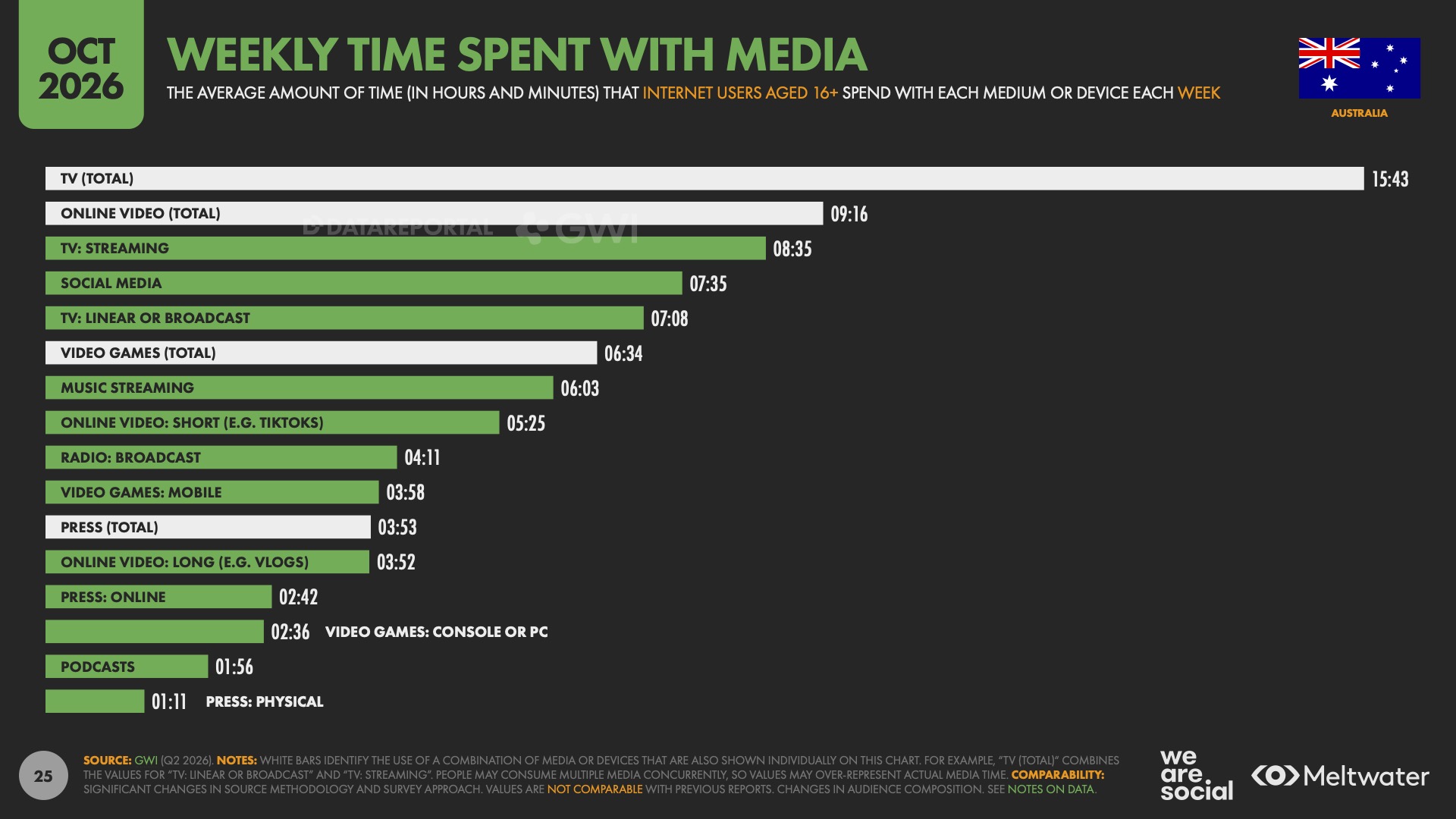
7 hours and 35 minutes spent on social media each week by Australian internet users aged 16+, compared with 7 hours and 8 minutes watching linear television.
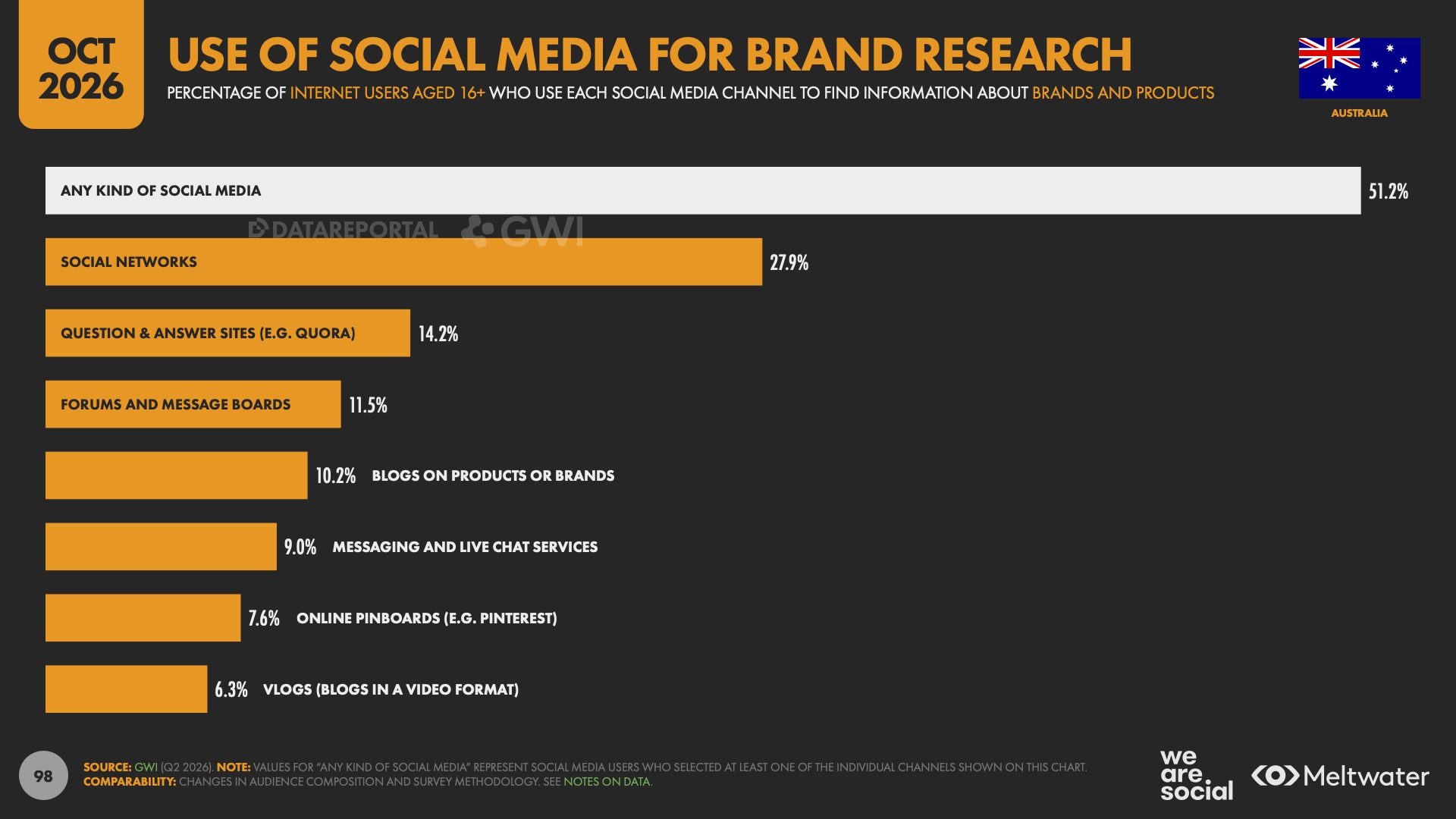
51.2% of internet users aged 16+ use some form of social media to research brands and products.
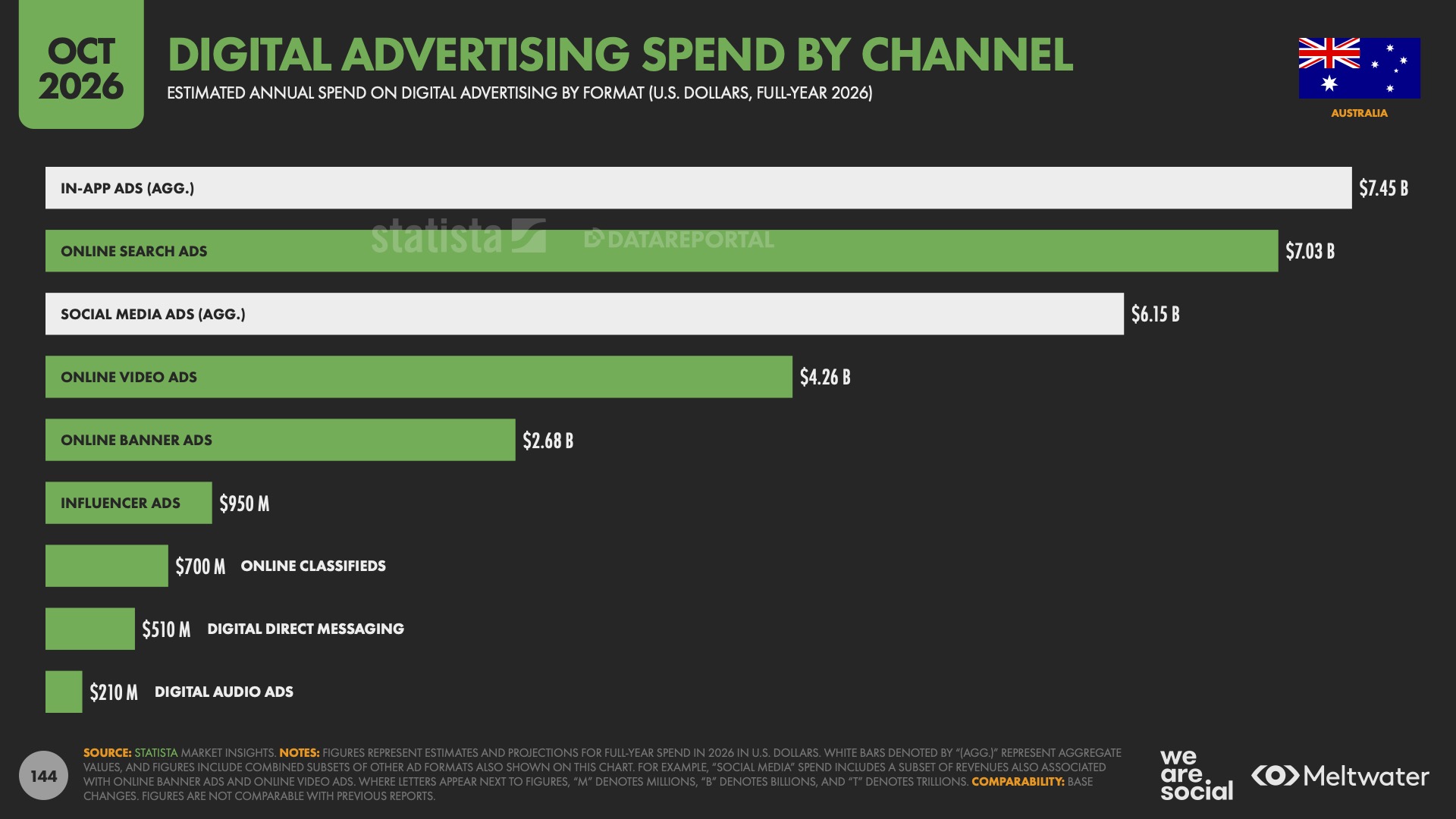
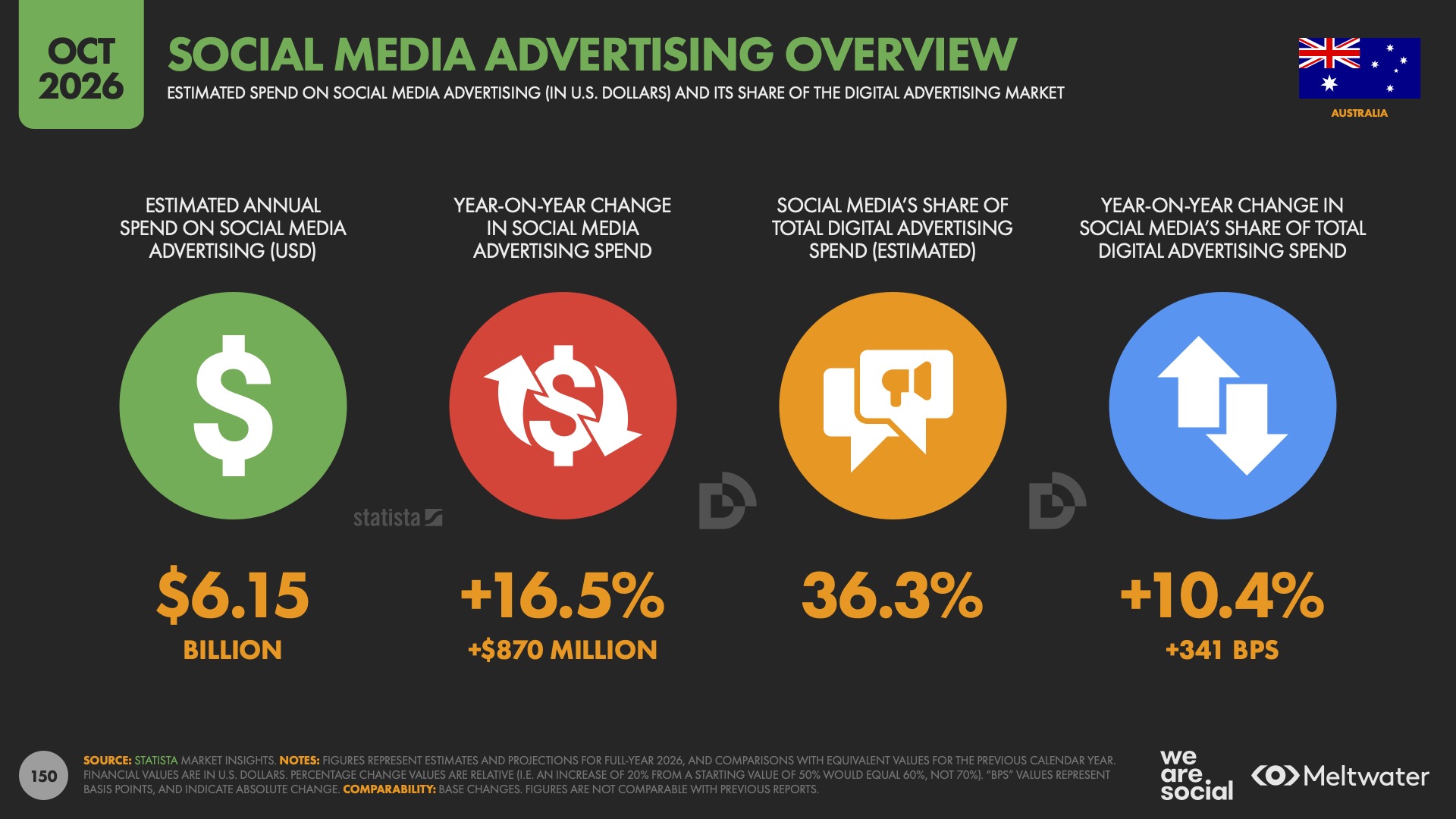
US$6.15 billion in projected social advertising expenditure for 2026, up 16.5% year-on-year.
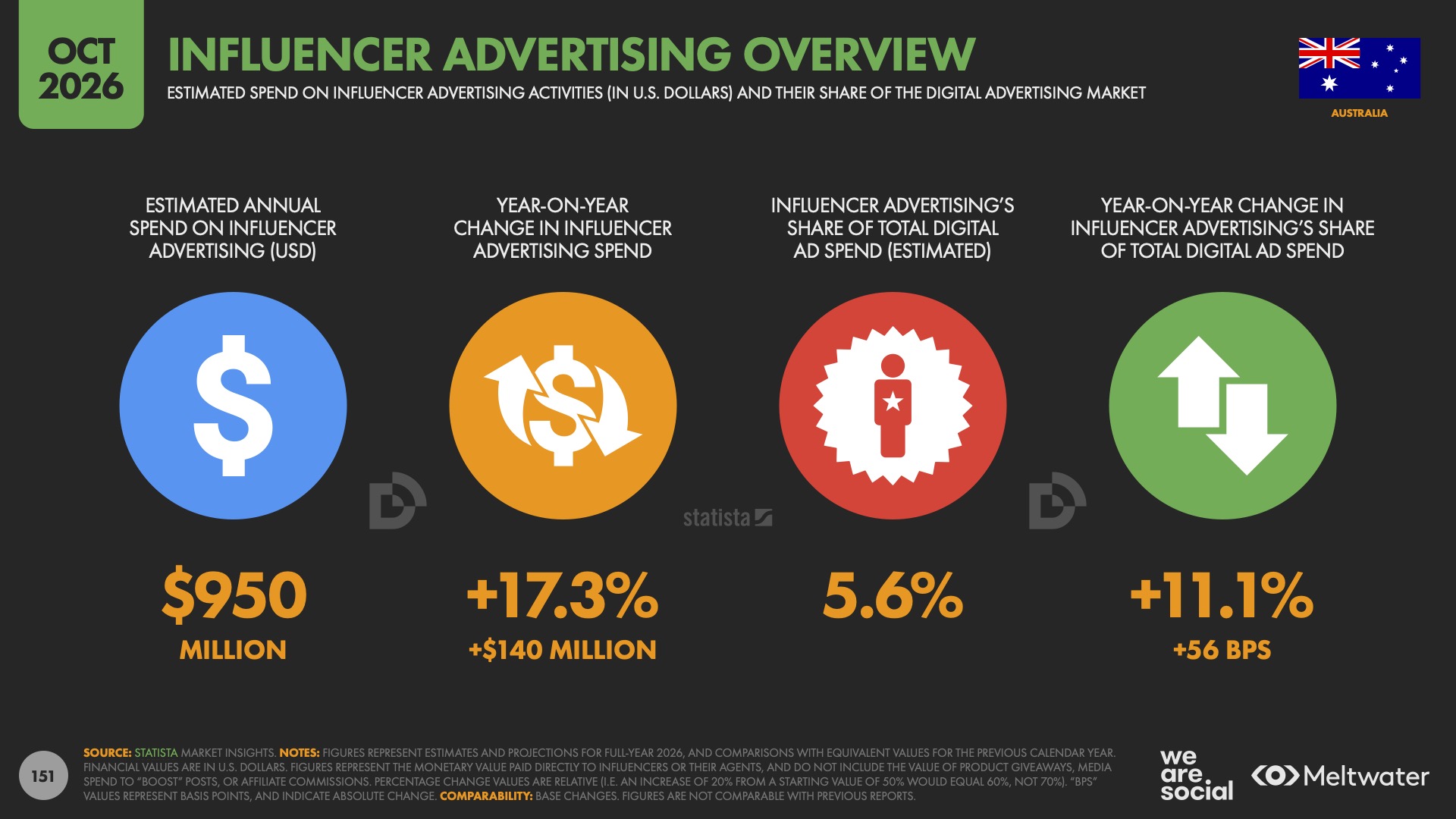
US$950 million in projected influencer advertising expenditure, an increase of 17.3%.
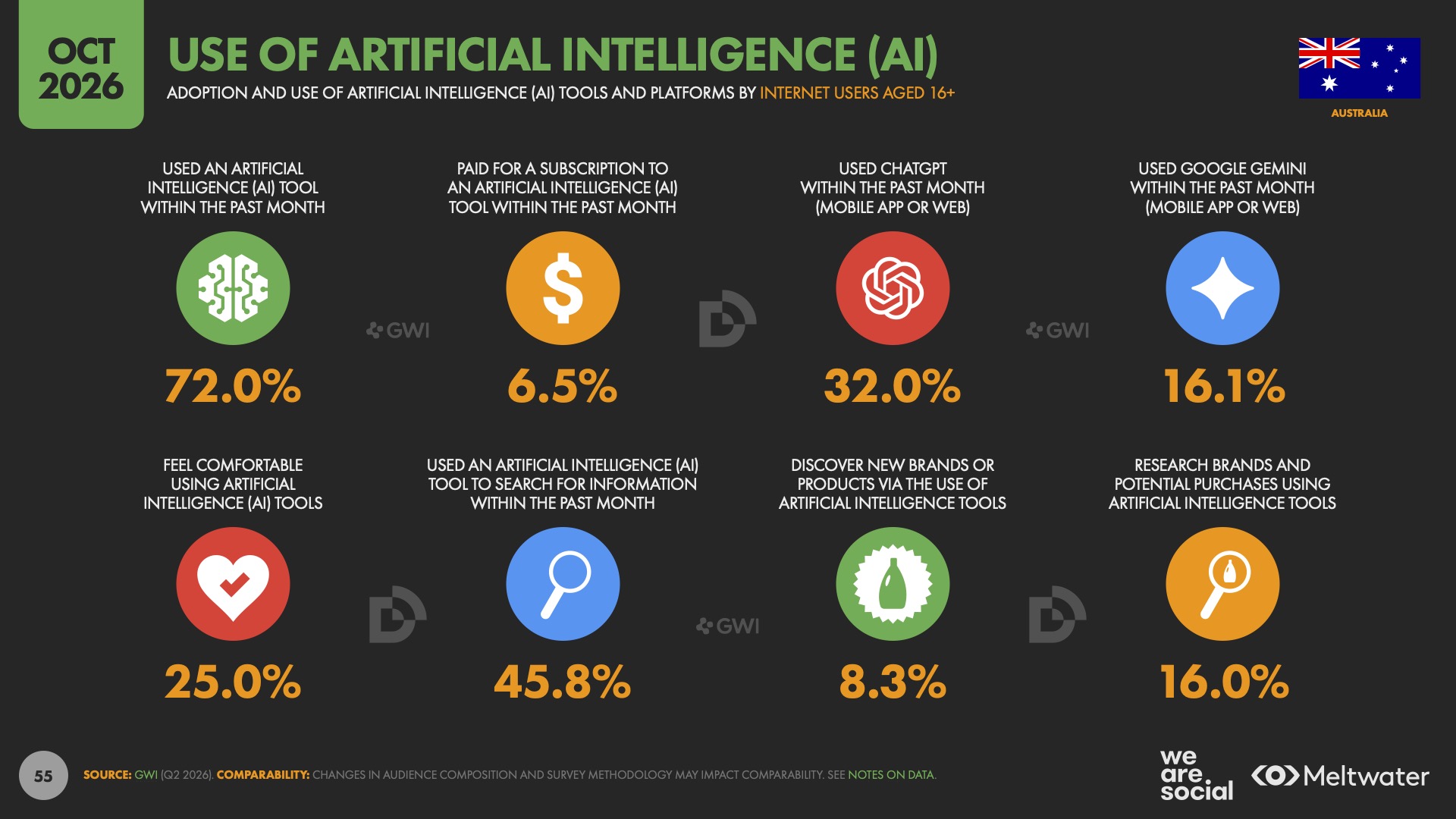
72% of Australian internet users aged 16+ have used an AI tool in the past month, although just 25% say they feel comfortable using the technology.
Taken together, these figures point to an increasingly social-first consumer journey, with new opportunities for brands to reach people, influence decisions and build relationships. They also raise some important questions about how effectively brands are using that investment.
Social is winning attention, but the battle is getting more complicated
Australians spend an average of 16 hours and 52 minutes a week on social platforms, including time spent watching online videos and using social media, of which 9 hours and 16 minutes are spent watching online videos and 7 hours and 35 minutes on social media, significantly exceeding the 7 hours and 8 minutes spent watching linear TV.
That should make marketers think carefully about where creative ideas begin. We’re still seeing campaigns developed around the traditional hero TV commercial, with social content adapted afterwards. Yet Australians’ media habits make a strong case for involving social much earlier in the creative process…
Australia is also among the world’s biggest streaming markets. Almost eight in ten Australians watch streaming content each week, while 45.5% pay for TV and movie streaming services, compared with 32.4% globally.
Consumers are moving between social feeds, streaming platforms and other digital experiences throughout the day. For brands, reaching an audience increasingly depends on understanding what people are doing in those environments and what kind of content they’re willing to give their attention to.
Social advertising is growing 3x faster than the digital market
Advertising budgets are following consumer attention. Australia’s total digital advertising expenditure is estimated at US$17 billion for 2026, growing 5.5% year-on-year.
Social media advertising is growing considerably faster, up 16.5% to a projected US$6.15 billion, or approximately A$8.76 billion. That means social now accounts for 36.3% of Australia’s digital advertising expenditure.
Australia also ranks third globally for annual social advertising spending per social media user identity, at US$272, more than four times the global average of US$58.
It’s a significant level of investment. But are brands getting better at connecting with the people they’re spending so much money to reach?
More media spend doesn’t automatically mean more relevance
The findings reveal a pretty uncomfortable gap between advertising investment and consumer sentiment.
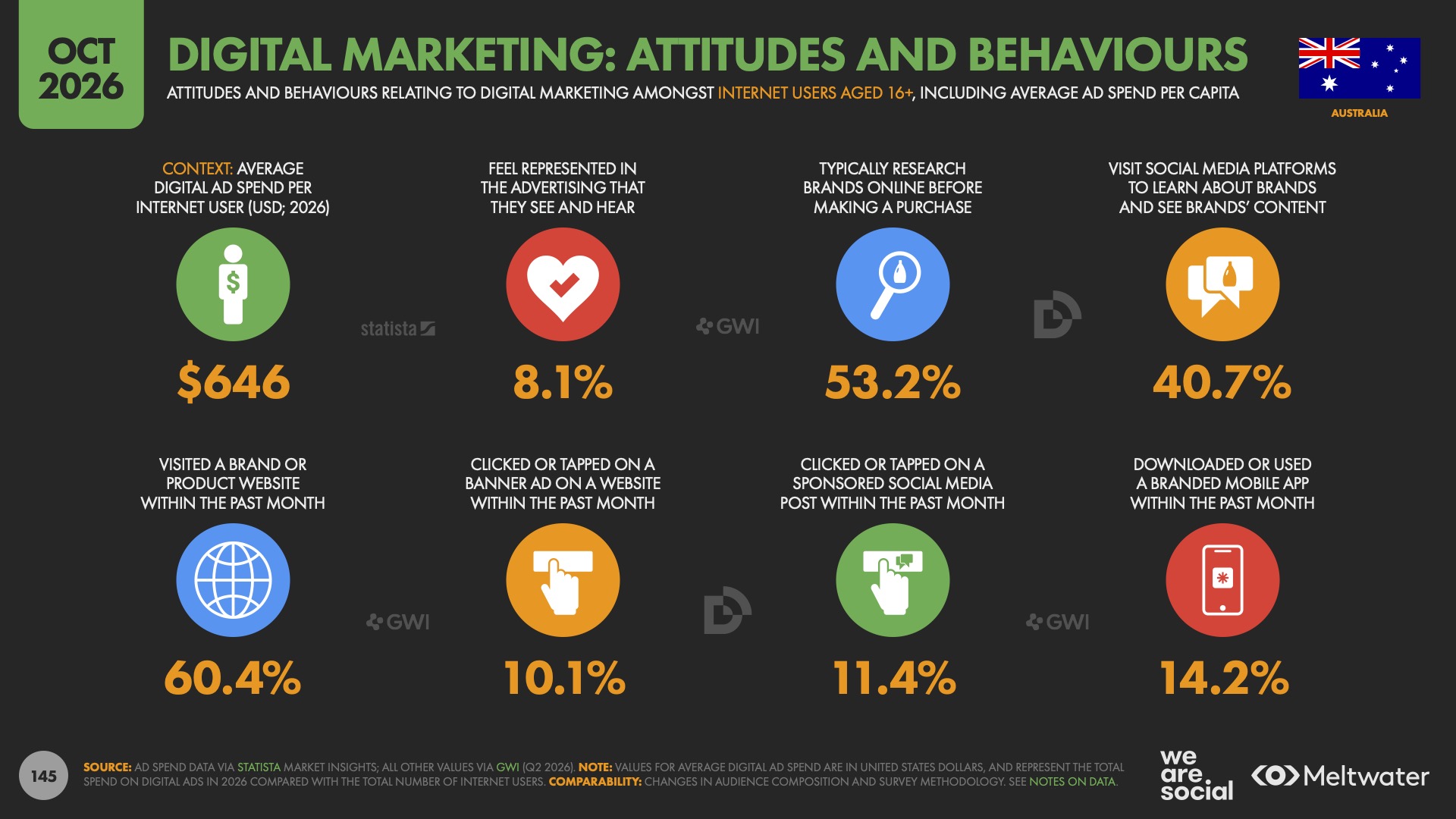
Almost 30% of Australian internet users use ad blockers, while just 10.1% feel represented in the commercial content they encounter. Australians are also among the world’s most concerned audiences when it comes to online misinformation and the misuse of personal data.
More than three-quarters express concern about what’s real or fake online, placing Australia fourth globally on that measure. And 43.3% are concerned about how their personal data is used, compared with a global average of 30.8%.
That’s a challenging environment for advertisers trying to earn people’s attention and trust.
As Suzie Shaw, our APAC CEO, puts it: “Simply scaling budget isn’t enough.” The opportunity for brands is to invest in work that feels relevant to the people they’re trying to reach. That means understanding culture, reflecting real audiences and creating content people actually want to engage with.
It also means thinking about how paid, owned and earned social work together.
Paid can get a brand in front of people. Owned channels help build ongoing relationships. Earned attention grows when people find something worth talking about, sharing or recommending.
The real test? If a brand switched off its paid media tomorrow, would anyone still be talking about it? 👀
Which social media platforms are Australians using in 2027?
One of the most interesting findings in this year’s report is how differently Australians use their favourite social platforms.
Facebook isn’t going anywhere
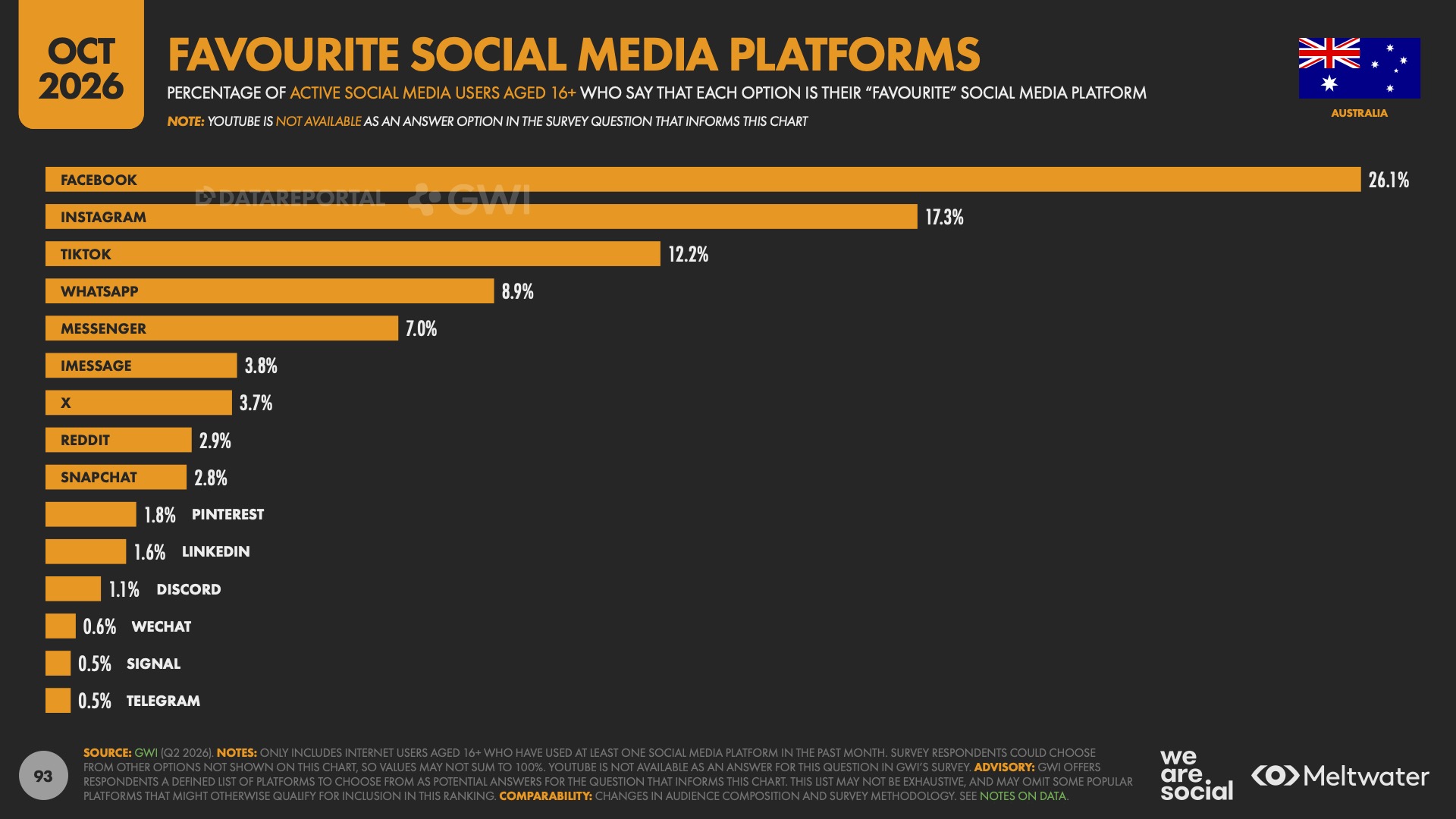
Facebook has been declared dead more times than we can count. Australians clearly didn’t get the memo. It remains the country’s most popular social platform by self-reported preference, with 26.1% of social media users naming it their favourite, roughly double the global average.
Facebook also generates 75.66% of tracked web referrals from the social platforms measured in the report.
But the platform people prefer, the one they spend the longest on and the one that sends visitors to websites aren’t necessarily the same.
Instagram and TikTok are locked in a battle for attention
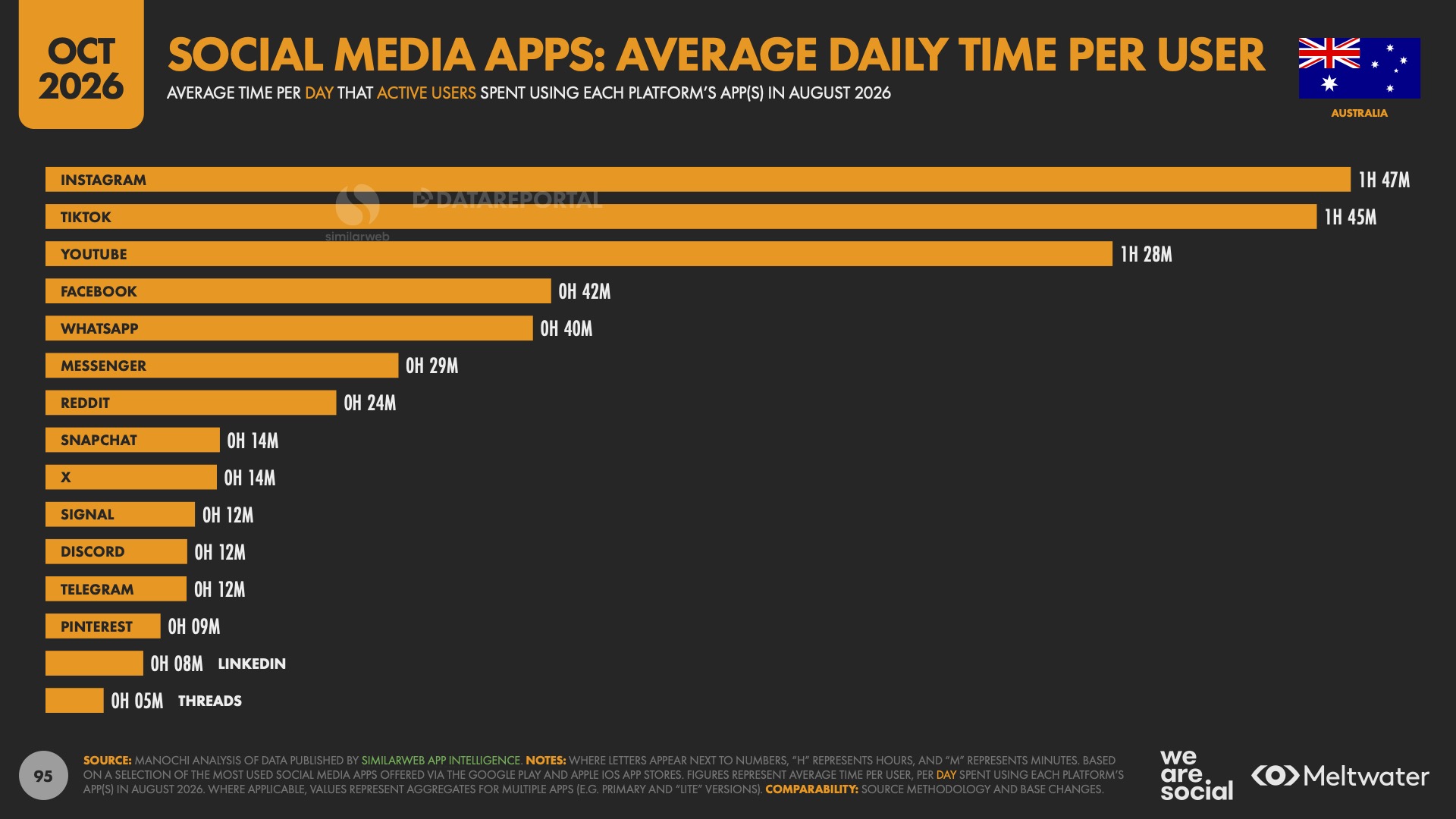
Among active app users, Instagram accounts for an average of 1 hour and 47 minutes of daily use, while TikTok is close behind at 1 hour and 45 minutes.
Instagram users open the app around 18 times a day, compared with roughly 14 daily sessions for TikTok. TikTok, meanwhile, holds people’s attention for longer during each visit.
For marketers, these behaviours should shape creative strategy. A platform built around frequent check-ins requires different thinking from one where people settle in for longer viewing sessions.
YouTube still offers enormous reach
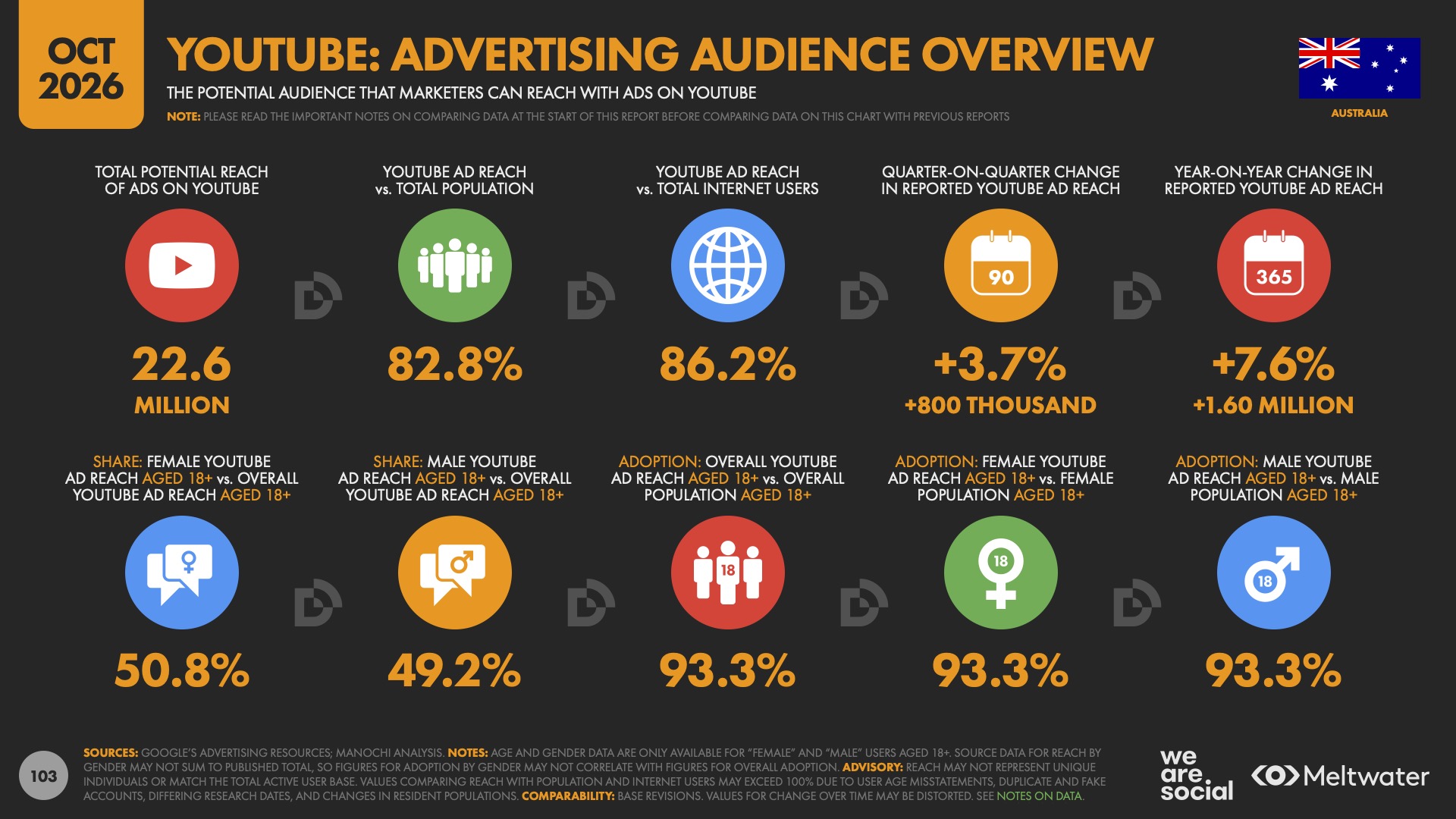
YouTube has Australia’s largest reported potential advertising audience among social platforms, reaching 22.6 million accounts, equivalent to 93.3% of Australian adults according to the platform’s advertising tools.
It also records the longest average app session among the platforms highlighted in the report, at 12 minutes and 19 seconds per opening.
Together, these findings reinforce the importance of giving each social platform a clear job, supported by content designed for the way people use it. Posting the same creative everywhere is unlikely to make the most of those differences.
Social media is shaping how Australians discover and research brands
Social has been a significant part of the consumer decision-making process for quite some time. More than half of Australian internet users aged 16+ use some form of social media to research brands and products. That includes traditional social networks, alongside forums, question-and-answer platforms and other social content sources.
Search engines remain the most widely used destination for online brand research, at 58.6%, followed by brand websites at 38.3% and consumer reviews at 35.3%.
These channels work together throughout the customer journey. Someone might discover a product through a creator, check the comments, read a review, ask friends for recommendations and eventually purchase it somewhere else. That’s a lot of influence happening before the final click. And it’s why marketers should be careful about judging social’s contribution purely through immediate conversions, as social commerce extends well beyond the checkout button.
Influencer marketing is booming. Are brands building lasting influence?
Australian influencer advertising expenditure is projected to approach US$1 billion in 2026, up 17.3% year-on-year. Yet just 9.8% of online shoppers cite influencer recommendations as something that encourages them to complete a purchase.
That figure doesn’t capture the full commercial value of creator activity. Creators can shape brand discovery, relevance, consideration and recommendation well before somebody decides to buy, which raises an important question about how brands are investing in creators.
Many partnerships still follow a familiar pattern: brief, post, report impressions, move on. But a creator’s influence comes from the relationship they’ve built with their audience over time.
Brands that want to benefit from that trust should be thinking about longer-term, always-on partnerships that allow creators to build familiarity, develop better stories and become genuine advocates.
If we believe creators build trust, why are you still hiring them one post at a time?
AI is changing brand discovery, but Australians remain cautious
AI is increasingly becoming part of how Australians research products, compare options and discover brands. According to Digital 2027 Australia, 72% of Australian internet users aged 16+ used an AI tool during the past month. Almost half used AI to search for information, while 16% used it to research brands or potential purchases and 8.3% discovered new brands or products through AI.
But adoption doesn’t necessarily equal confidence. Only one in four Australians say they feel comfortable using AI tools. And separate research in the report finds that just 18.7% believe AI enhances their daily lives. That creates an interesting challenge for brands.
As AI becomes another route to brand discovery, marketers need to think more broadly about the information shaping how their brands are understood. AI-generated answers can draw on far more than a company’s website. Publishers, creators, reviews and conversations across social communities can all contribute to the wider picture.
And while brands can work on making their information easier for AI systems to understand, they don’t control everything people say about them online. This makes reputation, advocacy and community increasingly important.
It’s also why Generative Engine Optimisation (GEO) is becoming a broader marketing consideration, connecting brand, search, social, content and earned media. We’ve explored this further in our marketer’s guide to GEO, including the role social content and third-party voices can play in AI search.
If AI recommends your brand, will people have enough reason to trust that recommendation? 👀
What should brands take from Digital 2027 Australia?
There’s plenty in this year’s report to inform media plans, content strategies and investment decisions. What stands out for us.
1. Make social central to creative planning. Australians’ media habits support building ideas for social environments from the beginning, with a clear role for each platform.
2. Invest in relevance alongside reach. Bigger budgets won’t automatically deliver stronger connections. Cultural understanding, audience representation and platform-native creative matter.
3. Think beyond individual channels and campaign windows. Paid, owned and earned social should work together, supported by creator partnerships, community engagement and measurement that accounts for social’s wider influence.
4. Build a brand people want to recommend. As AI adds new ways for people to discover brands, reputation and the conversations happening across the internet become increasingly valuable.
The brands that make the most of these shifts will be the ones that understand how people actually behave online and build their strategies around those behaviours.
Digital 2027 Australia FAQs
How many social media users are there in Australia in 2027?
Digital 2027 Australia reports 22.6 million social media user identities, equivalent to 82.8% of the country’s population. This represents growth of 7.6% year-on-year. User identities are platform-derived estimates and should not be treated as a count of unique individuals.
How much is spent on social media advertising in Australia?
Australian social media advertising expenditure is projected to reach US$6.15 billion in 2026, up 16.5% year-on-year. Social represents approximately 36.3% of total digital advertising spend. These are full-year 2026 estimates reported in Digital 2027 Australia.
What is Australia’s most popular social media platform?
Facebook ranks first for self-reported favourite social platform in Australia, with 26.1% of surveyed social media users choosing it. Instagram, TikTok and YouTube also play major roles, with different strengths across audience reach, engagement and web traffic.
How do Australians use social media to research brands?
51.2% of Australian internet users aged 16+ use some form of social media for brand and product research. This includes social networks, forums, question-and-answer sites and other social content sources.
How is AI influencing brand discovery in Australia?
AI is emerging as another source of brand information. Among Australian internet users aged 16+, 16% used AI to research brands or potential purchases in the past month, while 8.3% discovered new brands or products through AI tools.
Download Digital 2027 Australia
From social platform behaviour and advertising investment to creators, streaming, e-commerce and AI, Digital 2027 Australia provides a detailed picture of how Australians are spending their time, attention and money online.
Created by We Are Social and Meltwater, the report offers data and insights to help marketers plan smarter, create more relevant work and understand where consumer behaviour is heading.
And if you’re looking to find out more about how it all compares to Global digital trends and social behaviours, we’ve got you. Make a cup of tea, get comfortable and read about it here.
Source: We Are Social and Meltwater, Digital 2027 Australia. Advertising expenditure figures refer to projected full-year 2026 values. AUD equivalents are approximate. Social platform audience, usage and referral measures have different methodologies and should not be interpreted as interchangeable.

 Reports